Public Opinion

Home Public Opinion

More Americans want the US to stay the course in Ukraine as long as it takes

0
more-americans-want-the-us-to-stay-the-course-in-ukraine-as-long-as-it-takes
More Americans want the US to stay the course in Ukraine as long as it takes Just before the recent Ukrainian advances into Russian territory, there were signs that Americans were becoming somewhat less confident about Ukraine’s chances in the war with Russia. With the U.S. currently in the midst of a heated election season, and some Republican politicians expressing less support for backing Ukraine, one might have expected a decline in public support for Kyiv.

However, the results of our new University of Maryland Critical Issues Poll conducted with SSRS show strong and even increasing support for Ukraine.

The poll, conducted by SSRS, surveyed 1,510 American adults through their probability-based online panel, along with additional oversamples of 202 Black Americans and 200 Hispanics. The survey was carried out from July 26 to August 1, just before Ukraine’s incursion into Russia’s Kursk region. The margin of error is +/- 3.0%. Here are some key takeaways from the poll.

Americans Across the Political Spectrum Sympathize More with Ukraine Than Russia

A clear majority of Americans, regardless of political affiliation, express more sympathy for Ukraine than Russia in the ongoing conflict. According to a recent poll, 62% of respondents favor Ukraine over Russia, with 58% of Republicans and 76% of Democrats sharing this sentiment. In contrast, only 2% of Americans sympathize more with Russia, including 4% of Republicans and 1% of Democrats.

While 20% of Republicans say they sympathize with neither side, only 7% of Democrats feel the same. Additionally, 5% of both Republicans and Democrats stated they sympathize equally with both sides.

Increasing Support for Long-Term U.S. Commitment to Ukraine

The latest poll shows growing support for the U.S. to maintain its backing of Ukraine for as long as necessary. The percentage of respondents advocating for continued U.S. support has risen since the October 2023 poll, reaching the highest level since spring 2023. 48% of all respondents now say the U.S. should support Ukraine for the duration of the conflict, with 37% of Republicans and 63% of Democrats agreeing.

This shift is particularly noteworthy among Republicans, considering recent statements by Republican presidential candidate Donald Trump and Senator J.D. Vance, both of whom have expressed opposition to further U.S. military aid to Ukraine. Despite these positions, public support for continued U.S. involvement in Ukraine continues to rise across both political parties.

Fewer Americans Believe Ukraine Is Winning and Russia Is Losing

Since Russia’s invasion of Ukraine, our polls have tracked American public opinion on the performance and prospects of both Russia and Ukraine in the war. This assessment is important as it could influence the level of public support for continued U.S. backing of Ukraine. In the previous three polls conducted since March-April 2023, there was little change in this evaluation. However, the latest poll reveals a notable decline in the perception that Ukraine is winning and Russia is losing.

In the most recent survey, 30% of respondents believed that Russia is failing, down from 37% in October. Meanwhile, only 21% said Ukraine is succeeding, a decrease from 26% in the previous poll. A plurality of respondents—around one-third—felt that neither side was winning or losing.

When broken down by party lines, Democrats were more likely to believe Ukraine is winning, with 29% holding this view compared to 9% who thought the same about Russia. Republicans, on the other hand, were more divided, with 17% expressing the belief that Russia and Ukraine are equally successful in the conflict.

A Shift in Public Opinion: More Americans Back Long-Term Commitment

Recent surveys show a notable increase in support for continued U.S. involvement in the war. According to a Pew Research Center survey conducted in December 2024, 56% of Americans believe that the U.S. should continue to support Ukraine “as long as it takes” to defeat Russia. This is a sharp rise from earlier in the war when public support was more cautious.

Key Findings:

  • 56% of Americans now favor long-term U.S. support for Ukraine.
  • Support is particularly strong among Democrats, with about 75% backing continued U.S. assistance.
  • Republicans, while more divided, still show substantial backing for U.S. involvement, with 45% in favor of prolonged support.

This shift is indicative of growing awareness about the stakes of the war, both for Ukraine and for global stability. It also reflects the broader public understanding that helping Ukraine may prevent a larger regional conflict or embolden other authoritarian powers, such as China.

Why Are Americans Supporting Long-Term Commitment?

Several factors are contributing to this shift in American public opinion:

Ukrainian Resilience and Success: As Ukrainian forces continue to make significant gains, many Americans are rallying behind their fight for sovereignty and democracy.

The Threat of Global Instability: Many Americans recognize that a Russian victory in Ukraine could destabilize Europe and embolden other authoritarian regimes, making it a global issue, not just a regional one.

Moral Responsibility: A sense of moral obligation to support a nation under attack is driving American support. The idea that the U.S. must stand with Ukraine to defend freedom and human rights resonates with a significant portion of the public.

Bipartisan Agreement on Security: Despite political divisions, there is growing bipartisan agreement that a Russian victory could set dangerous precedents. Both sides of the political aisle are increasingly united in their belief that supporting Ukraine is crucial for U.S. security and global stability.

What This Means for U.S. Foreign Policy

The shift in public opinion has important implications for U.S. foreign policy:

Continued Financial and Military Aid: As public support grows, it is likely that the U.S. will continue to send both military aid and financial assistance to Ukraine. This will include advanced weapons systems, humanitarian aid, and economic support.

Increased NATO Involvement: With growing support for Ukraine’s cause, there could be further collaboration with NATO allies to ensure that Ukraine is equipped to withstand Russian aggression and rebuild once the conflict ends.

Strategic Global Positioning: U.S. support for Ukraine is not just about the conflict itself but is also about positioning the U.S. as a global leader in defending democratic values and countering Russian influence in Europe.

May you also like it:

IRI Ukraine Poll: Strong Support for Victory, EU, and NATO Membership

Latest Polling Reveals Mood in Ukraine and Desire for Optimism

Wide Partisan Divisions in Americans’ Views of the War in Ukraine: What You Need to Know

Conclusion

As the war in Ukraine drags on, American public opinion is increasingly aligned with the idea of staying the course. The growing support for long-term U.S. involvement highlights the importance of Ukraine’s fight for sovereignty, global security, and the preservation of democratic values. This consensus on continued U.S. support may shape U.S. foreign policy for years to come, ensuring that the U.S. plays a central role in the fight for Ukraine’s future.

FAQ

1. How much support does the U.S. have for staying in Ukraine?
Recent polling shows 56% of Americans support continued U.S. assistance to Ukraine for as long as necessary to defeat Russia.

2. Why is there growing support for U.S. involvement in Ukraine?
Support is driven by factors like Ukraine’s resilience, global security concerns, moral responsibility, and bipartisan agreement on the need to counter Russian aggression.

3. Is support for Ukraine strong among both Democrats and Republicans?
Yes, 75% of Democrats and 45% of Republicans support ongoing U.S. involvement in Ukraine.

4. What role does the war in Ukraine play in global security?
Many Americans see the war as a crucial battle for global stability, believing that a Russian victory could embolden other authoritarian regimes and destabilize Europe.

5. What are the implications for U.S. foreign policy?
U.S. foreign policy is likely to focus on continued military and financial aid, increased collaboration with NATO, and a strategic commitment to defending democratic values.

6. What does this shift in public opinion mean for the future of U.S. support for Ukraine?
As public support grows, U.S. commitment to Ukraine is likely to remain strong, potentially influencing foreign policy decisions for years.

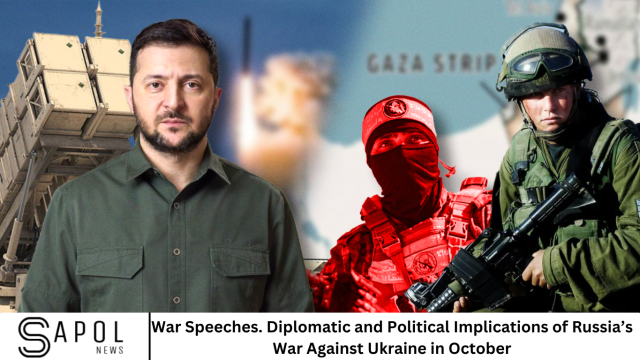
War Speeches. Diplomatic and Political Implications of Russia’s War Against Ukraine in October

0
War Speeches. Diplomatic and Political Implications of Russia’s War Against Ukraine in October

October 2023 was rich in foreign policy events and geopolitical shifts. Lack of consensus in the USA about further support to Ukraine, election of a pro-Russian government in Slovakia, unbending pro-Kremlin policy in Hungary, and intensified hostilities in the Middle East may affect the agenda in the Russia-Ukraine war.

At the same time, military support to Ukraine remains unchanged. Today, it predominantly focuses on the reinforcement of air defense, with account for threats to Ukraine’s energy sector.

Ukraine is trying to reach a fair end to the war by promoting our own “peace formula”.

Russia does not show any willingness to stop military invasion but continues to seize Ukrainian lands. Russia targeted their foreign effort to reduce support to Ukraine and search for new allies. Kremlin puts a stake on the protracted war, global instability, and fatigue of the West from Ukraine. All of it has to send a signal for more decisive action from international community to stop the key source of global destabilization.

Ukraine preparing for the “worst ever winter in history” and scaling its own “peace formula”

In October, Ukraine continued to prepare for possible missile strikes at energy infrastructure. Kyiv is certain that Russia who last year attacked about 70 major energy facilities and caused damage for almost USD 9 bln, will make another attempt to destroy Ukraine’s energy infrastructure. This position is shared by the EU and NATO. Thus, the NATO Secretary General, Jens Stoltenberg, believes that Putin is preparing to use winter as weapons, again. He wants to target the energy system and the gas infrastructure of Ukraine. according to Ukrainian and British intelligence, Russians are trying to accumulate the resources for that: Moscow has not been using missiles for attacks for some time now, to target Ukrainian civilian and military infrastructure, but they mostly use drones. However, according to estimates the Defence Express, from May to September, 2023, Russia launched almost 600 cruise missiles at Ukraine.

In order to prepare for the “worst ever winter,” Ukraine and partners reinforce energy infrastructure and air defense. According to The Economist, within the first component Ukraine produced and ordered 100 high voltage transformers to replace the destroyed units. Most of them are stored in Poland and Romania. In parallel, UK are training Ukrainian engineers to protect the energy system. Azerbaijan, Japan, Germany, USA, and EU provided to Ukraine either equipment (transformers, solar panels, etc.) or financial assistance for at least USD 650 mln to restore the energy infrastructure.

Moreover, Ukrainian private energy company DTEK anticipates this winter to be more difficult than last year because of more intense shelling, thus investing the unprecedented UAH 20 bln into the winterization for 2023/24. The investment was made into the repairs of TTPs, extraction of coal, oil, and gas. In addition, because of the last year’s shelling, Ukrainian energy system has lower backup capacity. That is why energy sector also expects to rely on the reinforced air defense.

The reinforcement of air defense was made a key priority, among others, during the recent meeting of the Ukraine Defense Group (Ramstein format) on October, 11, in Brussels. Following the meeting, Ukraine will receive additional air defense systems Patriot and IRIS-T from Germany, and 6 Hawk systems from Spain. In addition, it was reported that Ukraine will be able to rent air defense systems for winter season from several countries. In total, following the recent Ramstein, our country will be allocated with USD 500 mln worth military assistance. The packages include 155 mm and 105 mm artillery shells, high precision aircraft munition, anti-drone systems, armored vehicles, small arms, etc.

In October, Ukraine also received from the USA the ATACMS missiles designed for the range of up to 160 km. Shortly after, the Ukrainian Army struck the airfields in the occupied cities of Berdyansk and Luhansk, where they hit 9 russian helicopters, the air defense system, and runways. Besides, Ukraine made and agreement with Romania about the fast track training program of Ukrainian pilots for F-16.

Another significant process is to promote Ukrainian Peace Formula. Thus, on October, 28–29, a meeting took place on Malta among foreign policy and national security advisers about the implementation of Ukraine-suggested plan to end the war and establish lasting peace. It was the third meeting following the encounters in Copenhagen (Denmark) and Jeddah (Saudi Arabia) earlier this year. In general, the event was attended by diplomats from 66 countries, which is ab. 30% more than during the previous meeting in Jeddah. According to President Volodymyr Zelensky, it shows that the Ukrainian Peace Formula is going global as the meeting had representatives from all continents, including Africa, Asia, and Latin America. Interestingly enough, but Armenia joined the meeting for the first time, as they got disillusioned about Russia as an ally. Therefore, they are trying to shift the focus of their foreign policy towards the West.

Malta meeting participants were presented the developments on 5 key positions. When implemented, they will contribute to the establishment of sustainable, just, and comprehensive peace. They talked about nuclear and radiation security, food security, energy security, the release of all captured and deported persons, the restoration of Ukraine’s territorial integrity and global order.

For example, to restore territorial integrity of Ukraine, they suggested the following:

to reform the UN Security Council and restrict the veto power for its permanent members;

to enhance the role of the International Criminal Court and recognize its jurisdiction and decisions;

to create an early prevention system about actions compromising sovereignty and territorial integrity of states.

Russia used HAMAS attack on Israel to discredit Ukraine. Slovakia and Hungary play along the aggressor.

Early last month, the HAMAS Palestinian group guerrillas orchestrated a massive attack against Israel that appalled the world with its cruelty. At the same time, in line with their regular line, Kremlin tried to benefit from the conflict. Thus, in the first conversation with the Israeli Prime Minister after the guerilla attack, Vladimir Putin said that the RF is allegedly taking steps to “facilitate in normalizing the situation and prevent any further escalation between Israel and HAMAS fighters.” Regardless, Russia later tried to promote a resolution in the UN Security Council that ignores HAMAS terrorism, and also suggested amendments to other resolutions. At the same time, russia’s permanent representative in the Council, Vasily Nebenzya, told that the conflict in Israel is beneficial for the USA and their defense industry.

In addition, Russia accused Ukraine of the fact that Western weapons land in the hands of HAMAS fighters. To confirm that, Kremlin transferred to the terrorists the weapons seized in Ukraine, and then shared fake allegations for the allegedly regular sales of western weapons to terrorists. They claimed that because the Ukrainian authorities are corrupt, military assistance is spreading around the world and gets into black markets.

The war in Israel was used by Russia as another pretext to accuse official Washington of neglecting conflicts in the Middle east with the focus shifted to Ukraine.

Another highly discussed topic of last month was the continued assistance to Ukraine from the USA. Thus, on October, 20, Joe Biden addressed the Congress with a request for almost USD 105 bln to finance the assistance to Ukraine, Israel, Taiwan, and security of U.S. borders. At the same time, a big share of the budget (over USD 61 bln) was planned for the assistance to our country.

A day before, the U.S. President addressed the nation and called on the Congress to show unity in the matter of assisting Ukraine, and called this moment a turning point, a “battle between global democracies and autocracies.” He also reiterated that the money spent is the “smart investment that will bring dividends to U.S. security for many generations to come.”

Unfortunately, despite the huge effort of the White House, the assistance package proposed by Biden has not been adopted yet. Moreover, there is no understanding about when it could possibly be adopted, and whether it would be adopted at all. On the one hand, the U.S. political environment lacks sufficient agreement about the combination of assistance packages for Ukraine and Israel. On the other hand, USA has not adopted the final budget. At the same time, the possibility of the shutdown is growing every day. It will directly affect support to Ukraine. However, Ukraine’s Foreign Minister, Dmytro Kuleba, is rather optimistic about the continued support to our state.

Nevertheless, it looks like there is one less partner state willing to provide weapons to Ukraine. Thus, in the end of October, Slovakia adopted a new composition of the government led by the Smer-SD party leader, Robert Fico. The new Prime Minister, the same as many members of his Cabinet, is known for some anti-Ukrainian statements in the past. Upon his coming to power, he predictably said that the “new Slovakian government would not support Ukraine in the military needs, and will rather focus on humanitarian assistance.”

Slovakian government leader also said he was not going to vote in the EU for “any sanctions” against Russia without impact assessment for the EU MS,and also told about corruption in Ukraine.

Notably, in October, an overt enemy of Ukraine, Hungary’s Prime Minister, Viktor Orban, met Vladimir Putin in China, and shook his hand. Moreover, Hungary’s Foreign Minister, Peter Szijjarto, had his second visit in a year to Belarus, allegedly to “maintain the communication channels.” In addition, Orban said that Ukraine would not win in the front, and also compared Hungary’s membership in the EU with the Soviet occupation.

Despite that, Kremlin risks losing a partner in another part of the world – Armenia. National Assembly of Armenia passed a draft law on the ratification of Rome Statute. Therefore, Armenia will have to enforce the arrest warrant for Vladimir Putin. Furthermore, Armenian Prime Minister, Nikol Pashinyan, said his state was ready to the rapprochement with the European Union.

In conclusion, we must highlight that in the end of October, Foreign Ministers of Central Asia states, such as Kazakhstan, Kirgizstan, Tajikistan, Turkmenistan, and Uzbekistan, agreed to continue the cooperation with the EU MS to combat russia’s attempts to circumvent sanctions. Growing cooperation in this area may send a serious blow at the Russian military and defense industry.

Strategy of Russian “Victory”: Cheap Russians and Global Instability

In contrast, Kremlin does not reject its imperialistic aspirations and they are ready to invest increasingly more human, political, and economic resources.

Last month showed that Russia is not capable of reaching just peace, and the war has now become a mode of survival for the dictatorship regime. Because of internal repressions, support of militarist attitudes inside the country, and internal propaganda to Russian elites, they still manage to maintain the overall public support for the invasion into Ukraine.

According to the survey of a Russian think tank Levada Center, as few as 34% of Russians support the cessation of war with the occupied territories to be returned to Ukraine. Hence, all official statements of Russian government about the alleged readiness for peaceful resolution of the war imply at least territorial losses for Ukraine.

Reaching the goals of the so-called “special operation” through agreements would be the most beneficial scenario for the Kremlin. However, Ukrainian society is not ready to come to terms with the arbitrary violation of international law and multiple crimes against humanity committed in Ukraine by Russian troops. It remains a priority for Moscow to keep the seized Ukrainian territories, despite the human loss.

Kremlin evaluates the lives of Russian citizen as cheap. That is why crossing a psychological threshold of 300,000 killed citizens in October failed to yield the wanted results. Even the Chief Commander of the Armed Forces of Ukraine, Valeriy Zaluzhnyi, admitted that he was mistaken to rely on draining Russian troops. Moscow pays no regard to the losses. It can be confirmed by the “cannon fodder” assaults at Avdiyivka, where the aggressor lost at least a brigade, without major gains.

No one is surprised by the new evidence to executing Russian soldiers for attempts to retreat under the fire of Ukrainian artillery shelling. Moreover, Russian authorities expand mobilization plans but mostly due to contract-based service.

Kremlin is ready to announce a new wave of mobilization but is still hesitant about doing it, given the social and political settings, such as the presidential elections next spring.

Increased numbers of Russian soldiers are ensured due to recruiting to contract-based service the vulnerable social groups (migrants, bankrupt individuals, debtors, unemployed persons, etc.), women, mercenaries from other countries, and “volunteers” to the Redut PMC, effectively replacing the Wagner PMC. As of today, Russia managed to accumulate 400,000 soldiers in Ukraine.

At the same time, Russian foreign policy line primarily focuses on reducing support to Ukraine. at the Valdaj club meeting, Vladimir Putin openly stated he expected when the West would stop supporting Ukraine, because in that case, our country would allegedly have “only one week to live”. Russian propagandists use all possible international and internal platforms to discredit Ukraine and promote messages claiming that supplies of western weapons to Ukraine would not change the situation.

Besides, trying to reduce further military support to Ukraine from the West, Russian Federation is more often referring to nuclear weapons. In October, Russia revoked the ratification of the Test Ban Treaty, and conducted military training of strategic deterrence forces. Russian authorities even resorted to direct threats of nuclear confrontation claiming that would deny all chances for survival for Russia’s adversaries. However, in the settings of sanctions, Russia must think about survival and search for resources to be able to continue the war. The aggressor has already spent USD 167 bln for the war, and the defense expenses for 2024 will be about 6% of GDP.

The blown-up military budget of the RF in the settings of sanctions will likely aggravate the pressure from inflation and the economic situation. The government already faces the need to keep the rouble from dropping, such as obliging individual major exporters to sell foreign currency proceeds.

Such conditions, and also international isolation, make Russia re-orient their foreign policy effort to partnerships with Iran, KNDR, China, and Belarus. The aggressor is also trying to maintain close relations with countries that are members of such associations as SCO, EUEU, BRICS, CIS.

Deepening relations between Russia and the KNDR is especially alarming. In addition to the confirmed supply of Korean munition to Russia, Pyongyang may receive from Moscow advanced technologies related to the intercontinental ballistic missiles, submarines with nuclear ballistic missiles, and military reconnaissance satellites, which jeopardizes stability and security in the Indo-Pacific region, in Europe, and all over the world.

In parallel, Russia is using Belarus to increase the production of munitions, intensifies relations with Iran to obtain and manufacture drones on their territory, deepens economic relations with China. Russia’s volume of trade with China has been growing. Although Beijing is guided by their own interests in the first place, the relations help Russian authorities adapt to international pressure.

At the same time, Kremlin continues to present Russia as a separate civilization to be the core for a new world order and which requires protection from external enemies.

According to the Russian position, the essence of the “Ukrainian crisis” is not about any territorial disputes but about the principles for building global agenda. Russian authorities invested much effort into dividing global community, to cause more chaos and lack of understanding. Building a new geopolitical order against the advantage of the “collective West” is a strategic plan of the dictatorship.

With regard to current foreign policy dynamics, current regime in Russia is becoming increasingly more dangerous for global security. The democratic world must make timely critical decisions, although they are not always easy to make, in order to reduce Russia’s presence in external platforms and eventually ensure its strategic defeat.

Frequently Asked Question

What are the main political implications of Russia’s war against Ukraine in October 2024?

The war has significantly impacted global political dynamics, creating deep divides between Russia and Western countries. Western nations, including NATO, continue to provide Ukraine with military and economic support. This has led to a broader geopolitical rivalry, primarily between Russia and the U.S.-led Western bloc, resulting in sanctions, diplomatic isolation for Russia, and growing tensions in international relations.

How have Russia’s speeches affected global diplomacy?

Russian speeches often portray the conflict as a defense of national sovereignty against Western encroachment, using rhetoric to justify military actions. This has been a tool for galvanizing domestic support, but it has further strained relations with the West, diminishing diplomatic avenues. The U.N. and other international organizations have been divided, with some supporting Ukraine and others remaining neutral or aligning with Russia.

What diplomatic efforts have been made to end the war?

Diplomatic talks have been limited and have often failed to yield a lasting ceasefire or peace agreement. High-level summits and back-channel negotiations have taken place, involving intermediaries like Turkey and France, but Russia’s terms, including the recognition of Crimea as part of Russia, remain a major point of contention for Ukraine and its allies.

How has the war affected Russia’s relationships with other countries?

Russia’s relationship with many European and Western countries has soured, as these nations impose harsh sanctions and provide military support to Ukraine. However, Russia has strengthened ties with China, India, and other countries that maintain a more neutral or supportive stance towards Moscow. These relationships have been crucial in mitigating the impact of Western sanctions.

What role does NATO play in the conflict, and how do Russian speeches target it?

NATO has been a central actor in providing Ukraine with weapons, intelligence, and economic aid, which Russia views as a direct threat. Russian speeches often criticize NATO expansion and frame the conflict as a defense against NATO’s supposed encirclement of Russia. This rhetoric is used to justify aggressive military tactics and heighten nationalistic sentiments within Russia.

What are the economic consequences of the war on Russia and the global economy?

The war has led to severe sanctions on Russia, isolating it economically from much of the world, reducing its access to markets, and significantly impacting its energy exports. The global economy has also been affected by disruptions in energy supplies, inflation, and food security concerns due to the war’s impact on grain exports from Ukraine and Russia.

How does public opinion in Russia and Ukraine influence their governments’ positions?

In Russia, government speeches are designed to maintain public support for the war by framing it as necessary for national security. However, internal dissent has increased as the war progresses. In Ukraine, public opinion is strongly supportive of defending territorial integrity, which drives the government’s commitment to resist Russian advances. International pressure and public opinion also influence both governments’ diplomatic and military decisions.

Conclusion

The ongoing conflict between Russia and Ukraine, particularly in October 2024, has had profound diplomatic and political consequences globally. Russia’s speeches and justifications for the war continue to shape its domestic and international relations, reinforcing nationalistic sentiment and portraying the conflict as a defense against Western influence. On the other hand, the international community remains deeply divided, with Western nations offering unwavering support to Ukraine, while Russia strengthens ties with countries that have adopted a more neutral or supportive stance.

Efforts at diplomacy have yielded limited results, with Russia’s demands, such as the recognition of Crimea, remaining non-negotiable for Ukraine. The war has further strained Russia’s relationships with Europe and the U.S., while NATO’s role has intensified the geopolitical rivalry. Meanwhile, the global economy has felt the impact of sanctions, energy disruptions, and food security challenges, which exacerbate the global fallout from the conflict.

Ultimately, the war continues to influence not only the political landscapes of Russia and Ukraine but also the broader global order, with lasting effects on international diplomacy, security, and economic stability. The path forward remains uncertain, and the need for effective diplomatic solutions to de-escalate the conflict is more critical than ever.

News from the War: Public Opinion and the Future Price of Peace

0
news-from-the-war-public-opinion-and-the-future-price-of-peace

News from the War: Public Opinion and the Future Price of Peace On June 14, the London School of Economics hosted the concluding event of the DINAM Ukraine discussion series, where prominent experts shared their insights on the ongoing Russian aggression against Ukraine. Titled “News from the War: Public Opinion and the Future Price of Peace”, the panel delved into how Ukrainian public opinion has evolved over 15 months of full-scale war.

Key speakers included Petro Burkovskyi, Executive Director of the Ilko Kucheriv Democratic Initiatives Foundation; Tamila Tasheva, Permanent Representative of the President of Ukraine in Crimea (since 2022); and Olga Aivazovska, Head of the Board of the Civil Network OPORA NGO. The conversation, moderated by Maria Zolkina, a Ukrainian researcher and political analyst, centered on how the Ukrainian public views potential conflict resolution models.

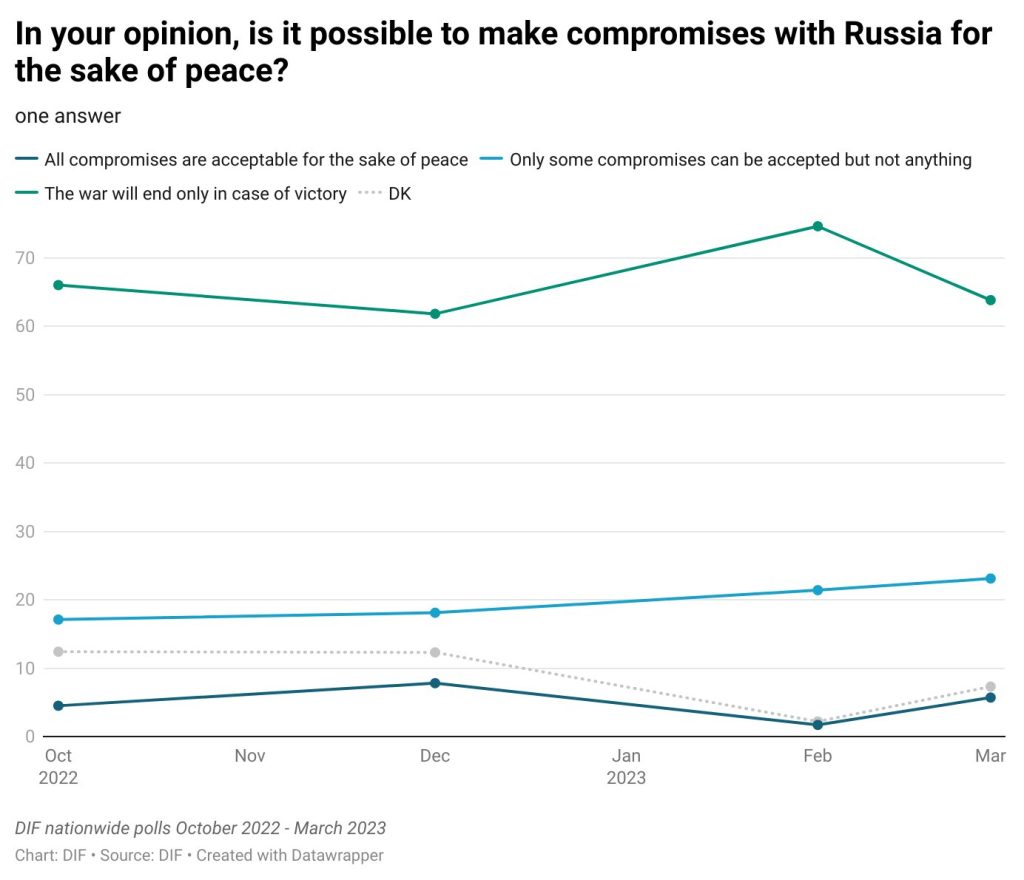
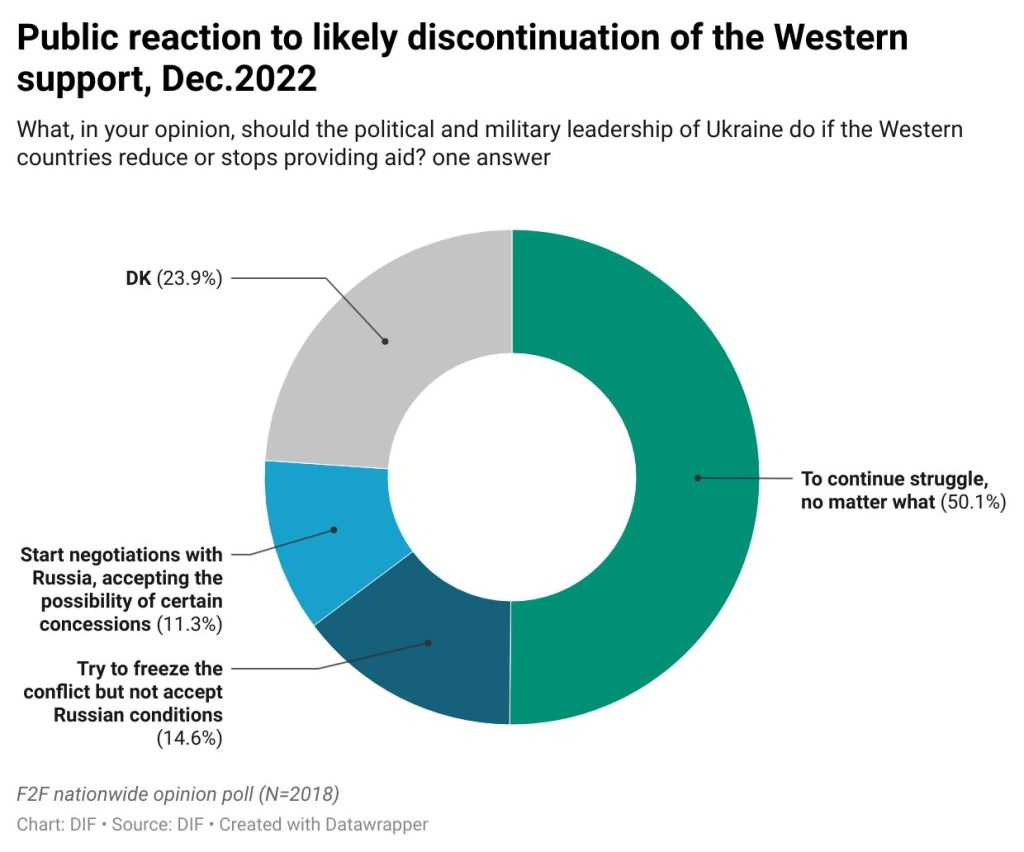
Burkovskyi presented key trends based on public opinion in Ukraine, highlighting a growing sense of resolve among Ukrainians. Notably, 64% of Ukrainians believe that the war will only end with a victory. He also emphasized the belief that if the West halts military aid, the fighting would likely continue, underscoring the importance of continued international support.

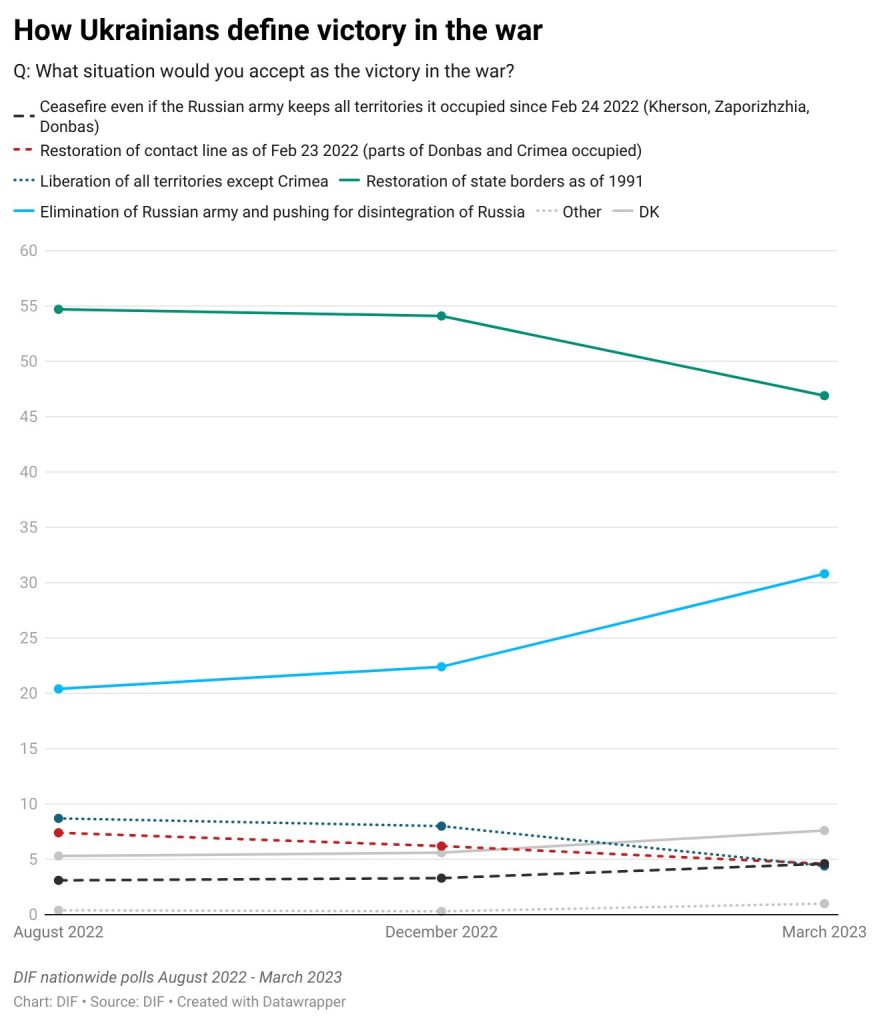
The discussion also touched on the radicalization of public opinion, with 31% of Ukrainians now advocating for the complete defeat of the Russian army and the disintegration of Russia itself as a necessary condition for victory. The panel further explored legal, human rights, and humanitarian arguments supporting Ukraine’s strategy to reclaim its territories, including why Crimea remains a critical “red line” for Russia and how this issue shapes the war’s dynamics.

The Growing Role of Public Opinion in the Ukraine War

Public opinion is increasingly shaping the course of the war and the policies of countries involved. In the United States, for example, the ongoing support for Ukraine has fluctuated, particularly as the costs of war continue to rise. As of 2024, 31% of Americans feel the U.S. is providing too much support to Ukraine, a notable shift from 7% in 2022. This reflects a larger trend of fatigue surrounding the prolonged conflict and its mounting costs. However, a significant portion of the U.S. population (about 48%) still believes that continued support for Ukraine is essential to defeating Russian aggression.

The situation in Europe is similarly complex, with citizens in countries like Poland and Germany expressing strong support for Ukraine. However, rising energy costs, inflation, and concerns about security within the EU are beginning to influence public sentiment. As the war drags on, European leaders may face increased pressure to balance support for Ukraine with domestic challenges.

The Changing Face of Support: Partisan and Generational Divides

Support for Ukraine is not uniform across political lines. In the U.S., Republicans are increasingly divided on the issue. Half of Republicans (49%) now say the U.S. is providing too much aid to Ukraine, compared to only 16% of Democrats. Among Democrats, 36% are now asking for increased support, while Republicans remain more focused on reducing involvement. Similarly, younger Americans from both parties are more likely to question the level of U.S. assistance to Ukraine, signaling a potential shift in long-term public opinion on foreign military involvement.

In Europe, the political landscape is also evolving. With elections looming in several countries, the rise of right-wing populism has led to more vocal calls for reassessing Ukraine’s membership in the EU and NATO. This shift in public opinion could have significant ramifications for future foreign aid and international support for Ukraine’s government.

The Price of Peace: What Will It Take to End the War?

While Ukraine remains resolute in its demand for military support to defeat Russian forces, the growing costs of the war, both in human lives and resources, will inevitably impact future negotiations. The question on the table is not only how much longer Ukraine can endure but also how much more Western powers are willing to invest in the conflict. Public opinion, particularly the weariness felt by ordinary citizens in Europe and the U.S., will ultimately shape how peace talks unfold in the coming years.

As both sides experience heavy losses, the idea of compromise and peace settlements is beginning to take center stage in discussions. The pressure to find a solution that benefits both Ukraine and Russia, while protecting the interests of the international community, is becoming increasingly urgent. However, with growing political instability in Western democracies and economic downturns globally, the price of peace will likely rise.

The Long Road Ahead: What Can We Expect?

The future of Ukraine depends heavily on the continued support of its allies, but as public opinion shifts, the ability of governments to provide unwavering assistance becomes less certain. In the coming months and years, several factors will determine the outcome of the war:

  • Domestic pressures in both the U.S. and Europe, particularly as election cycles continue.
  • Public fatigue with ongoing foreign conflicts and rising economic costs.
  • The strategic decisions made by Ukrainian leaders in managing both military resources and diplomatic channels.

May you also like it:

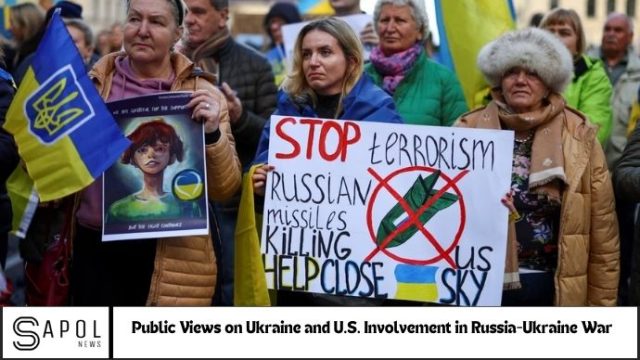
Public Views on Ukraine and U.S. Involvement in Russia-Ukraine War

The Meaning of Sovereignty: Ukrainian and European views of Russia’s War on Ukraine

More Americans want the US to stay the course in Ukraine as long as it takes

Conclusion

As we navigate through the complexities of the Ukraine war, it is clear that public opinion will play a pivotal role in shaping the future. While many still support Ukraine’s cause, the growing financial and human costs are creating divisions, particularly in the U.S. and Europe. The price of peace will likely be a compromise that balances military support, economic interests, and global security.

The question is no longer just whether Ukraine can win the war, but what peace will look like and how much it will cost. The road to peace may be long and arduous, but understanding the changing views of the public will be key to determining when and how the war will come to an end.

FAQ

What is public opinion on U.S. support for Ukraine?

As of 2024, 31% of Americans believe the U.S. is providing too much support to Ukraine.

How has public opinion in the U.S. shifted over time?

Support for Ukraine has decreased since March 2022, with many now questioning the level of aid provided.

How does public opinion differ by political affiliation?

49% of Republicans think the U.S. is giving too much support, while 36% of Democrats call for more assistance.

How does public opinion affect peace negotiations?

Public opinion plays a critical role in shaping government policies, potentially influencing how and when peace negotiations occur.

What is the price of peace in the Ukraine conflict?

The price of peace may involve a compromise on territorial issues and military support, heavily influenced by public opinion.

What does the future hold for Ukraine’s public support?

Continued domestic challenges and shifting public sentiment may impact Ukraine’s international support and future peace talks.

War Speeches. Russia has increased the war budget, while Ukraine is planning to ramp up arms production

0
War Speeches. Russia has increased the war budget, while Ukraine is planning to ramp up arms production

Last week (September 25 – October 1), Ukraine announced the creation of the Defense Industries Alliance for weapons manufacturing. The Kremlin hasn’t given up on its imperial ambitions and threatens to capture new territories. For this purpose, the aggressor state plans to spend more than a third of its federal budget funds on the war. 

Despite the growing national debt, Russia still manages to finance the war against Ukraine by way of partially circumventing the sanctions and using third-country companies to import military goods. 

Ukraine’s partners are making efforts to prevent Russia from bypassing sanctions, but the task of enforcing restrictions against Moscow requires closer attention from national governments and the development of a strategy for strengthening sanctions on a permanent basis.

Ukraine is creating an Alliance for weapons production and is working on the matter of strengthening its air defense capabilities 

On September 28, NATO Secretary General Jens Stoltenberg made an unannounced visit to Kyiv and met with Volodymyr Zelensky to discuss the issues of Euro-Atlantic integration and provision of military assistance to Ukraine. In particular, they talked about the need to strengthen Ukraine’s air defense capabilities before winter comes because Russia is expected to resume attacks on Ukrainian energy infrastructure.

Stoltenberg emphasized that at the Vilnius summit, which was held in July 2023, all members of the Alliance agreed that Ukraine will join NATO. According to NATO Secretary General, the Alliance made a historic decision to shorten Ukraine’s path to NATO by removing the requirement to implement a Membership Action Plan. 

Stoltenberg also underlined that NATO member countries continue to provide Ukraine with state-of-the-art capabilities and military equipment, including tanks, missile systems and air defenses, as well as training for F-16 pilots. “This is a collective effort by all NATO allies,” the Secretary General said, noting that of nearly 100 billion euros in military support committed to Ukraine since last year, almost half has come from European NATO allies and Canada. 

In his turn, Volodymyr Zelensky told that he discussed key defense issues with NATO Secretary General. “It is necessary to strengthen the air shield of Ukraine. We discussed the situation in connection with expected Russian attacks on Ukraine’s energy infrastructure,” the President said.

On September 28, the French Defense Minister Sebastien Lecornu and UK Defense Secretary Grant Shapps also came on a visit to Kyiv. According to Volodymyr Zelensky, the parties discussed the intensification of training of Ukrainian soldiers, the general strategy for winning a war, as well as the possibility of joint production of weapons that are necessary for Ukraine and its partners. 

According to New York Times, NATO member countries are planning to pump up weapons production in Ukraine. The journalists believe that the visits of Stoltenberg as well as French and British defense ministers to Kyiv are closely connected with this plan. According to NYT publication, localization of weapons production is a potentially lucrative prospect for Western manufacturers that will contribute to the economic development of Ukraine.

The U.S. Permanent Representative to NATO Julianne Smith said that there is a shortage of some weapons and ammunition due to the ongoing hostilities, and the NATO allies have provided Ukraine with everything they could. Therefore, NATO is developing a plan for the production of the required amount of scarce ammunition for Ukraine and members of the Alliance. 

Meanwhile, German arms manufacturer “Rheinmetall” has confirmed that it received permission from Germany’s Federal Cartel Office to set up a joint venture with the “Ukrainian Defense Industry”. The joint venture will be based in Kyiv and perform maintenance of military equipment received by Ukraine from Germany and other partner countries, as well as assembling, manufacturing and development of new military vehicles. It has also been reported that the industrial conglomerate “Czechoslovak Group” and “Ukrainian armor” are considering the possibility of joint production of the ASCOD infantry fighting vehicles in Ukraine.

On September 30, the first International Forum of Defense Industries (DFNC1) took place in Kyiv, bringing together representatives of 252 companies from more than 30 countries producing a full range of weapons and defense systems. At the Forum, Volodymyr Zelensky announced the creation of the Defense Industries Alliance and the establishment of special Defense Fund. According to the Ministry of Foreign Affairs of Ukraine, 38 companies from 19 countries had already joined the Alliance by the time the Forum closed. 

“Ukrainian companies signed 20 documents with foreign partners. These are agreements and memoranda on the manufacture of drones, repair and production of armored vehicles and ammunition. Cooperation formats include joint production, exchange of technologies and supply of components,” the MFA of Ukraine said in a statement.

According to the President of Ukraine, the special Defense Fund will be replenished through the use of dividends of state-owned defense enterprises and profits from the sale of confiscated Russian assets. The Fund will provide resources for the development of military production and cooperation, creation of new military facilities and implementation of programs necessary for the defense of Ukraine and well-being of Ukrainian soldiers.

Russia maniacally threatens to capture more Ukrainian territories and prepares itself for a long war

585 days since the start of full-scale war, the Russian Federation still wants to speak from a position of strength and spares no human or financial resources. In an interview with TASS news agency, the Minister of Foreign Affairs of the aggressor state Sergey Lavrov said that Russia is ready to come to terms, but taking into account the “realities on the ground” and Russia’s security interests. 

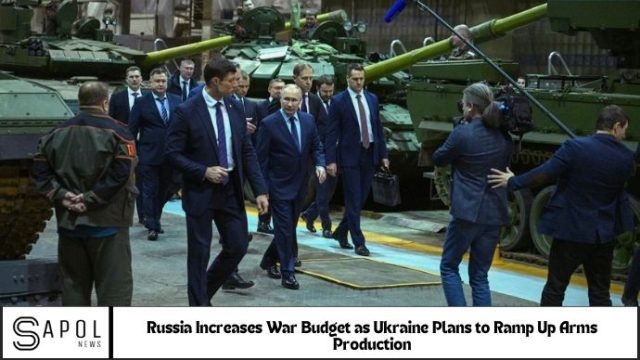
That said, Russia has already set a timeline for accomplishment of the “tasks of special operation” through military means. For example, Russian Defense Minister Sergey Shoigu spoke at the meeting of Defense Ministry’s Collegium and stated that the Russian army continues increasing its combat capabilities which will allow Russia to achieve the “target goals” by 2025. For this purpose, Russia plans to allocate a record 11 trillion rubles for the army in 2024 – roughly one-third of the federal budget, which means that Russia’s defense spending will hike by 68% compared to 2023.

Moreover, Russian authorities threaten to capture more Ukrainian territories and increase the number of “new regions” in the composition of the Russian Federation. “Special military operation will continue until the total destruction of Nazi Kyiv regime,” Dmitry Medvedev said. 

The Kremlin intends to continue using the services of volunteer units and private military companies in order to increase the size of its armed forces. In particular, on September 29, Vladimir Putin instructed “Wagner” group ex-commander Andrey Troshev to take on the task of forming new “volunteer units”. 

Furthermore, Putin signed a decree on autumn military conscription. A total of 130,000 people are to be called up for mandatory military service in the October-December timeframe. Although Russian conscripts are not supposed to participate in the war, the legislators entitled them to sign a contract with the Ministry of Defense and go fight for Kremlin’s imperial ambitions upon completion of first month of mandatory military service. It seems that the Russian authorities are doing everything to delay the start of mass mobilization.

At the same time, the Russian authorities are trying to regain the initiative on the battlefield. According to a Kremlin insider source cited by the Institute for the Study of War, Putin reportedly gave Sergey Shoigu a deadline of one month (until early October) to improve the situation on the frontline and stop Ukrainian counteroffensive in its tracks. 

However, judging by the current situation on the frontline, the Armed Forces of Ukraine are well on the way to achieving the goals of their offensive operation. The latest statements made by representatives of the defense agencies of Ukraine’s allies drew the ire of Russian officials. In particular, UK Defense Secretary Grant Shapps said that the government wants to send military instructors to Ukraine, while the chair of the Defense Committee at the German Bundestag emphasized that Ukraine has the right to launch long-range Taurus missiles on Russian territory.

In response, Dmitry Medvedev threatened to destroy British instructors and German factories that produce missiles: “These idiots are actively pushing us towards a third world war…” However, later on the Prime Minister of Great Britain Rishi Sunak ruled out the possibility of sending British military specialists to Ukraine – at least in the near future. 

Office of the President of Ukraine is convinced that the Kremlin’s bravura statements are nothing more than mere ambitions. Mykhailo Podolyak, who is an advisor to the head of the Office of the President of Ukraine, emphasized that “the post-Soviet Russia in the Putin era is a large factory for the production of exported ‘show offs’ that are a way of hypercompensating for their own complexes.”

The Kremlin is constantly trying to convince the domestic audience that the “special military operation” is a success. For this purpose, Russian authorities established a “memorable date” – September 30 – to celebrate the annexation of part of Ukraine’s territory. 

“You preserved and passed on your love for the Motherland to your children. Thanks to you as well as your firmness and determination, Russia has become even stronger,” Putin said in a video message on the occasion of the “day of reunification” of the Russian Federation with four oblasts of Ukraine.

Despite the numerous international crimes it has committed, Russia continues to consider itself a country that shares common European values. Russia diverts attention away from the atrocities committed by its armed forces in Ukraine through the use of propaganda tools and manipulation of public opinion. 

Nevertheless, international investigative bodies have found more evidence of Russian war crimes. Independent international commission on investigation of crimes in Ukraine has confirmed that the Russian military resorted to brutal methods of torture as well as committed rape and sexual violence  against Ukrainians. The Commission has also admitted the possibility of Russia’s genocide of Ukrainians and incitement to genocide.

Russia’s economy and military-industrial complex: sanctions against Russia are working, but it is necessary to take a more systematic approach and tighten sanctions 

Ukraine’s allies continue to exert economic pressure on Russia with the aim of limiting Russia’s ability to wage the war against Ukraine. The federal budget of the aggressor state is already feeling the negative impacts of sanctions: Russia’s national debt has increased by 2.2 rubles over the first six months of 2023, although the planned debt figure for the entire year was 2.5 trillion rubles. As of July 1, 2023, the amount of borrowing exceeded 25 trillion rubles, which is approximately 16.7% of the projected volume of GDP, while the costs of national debt servicing have increased by 4% to 718.1 billion rubles as compared to mid-2022.

At the same time, Russia still manages to get oil and gas revenues. Russian oil continues to rise in price despite a $60 per barrel price cap imposed by the G-7 countries and its allies: Urals oil grade is trading at $85.35 a barrel from the Baltic port of Primorsk and $86 from the Black Sea port of Novorossiysk. 

According to Bloomberg, Russia has assembled a so-called “shadow fleet” of tankers operating outside jurisdictions of countries that imposed sanctions in order to bypass the oil price cap. According to Financial Times, such a “shadow fleet” is capable of operating without Western insurance and other services. This allowed Moscow to increase the export prices for its oil in the face of fierce competition on the world market.

Furthermore, approximately two-thirds of Russian crude and petroleum products are being transported with the help of European companies. In order to avoid sanctions, European service providers must obtain appropriate attestations to confirm that the cargo was purchased at a below $60 per barrel cap price, but the majority of them rarely have an idea of the true value of the cargo. 

“More than by the use of ‘shadow fleet’, the impact of the oil price cap has been undermined by a failure of the participating governments to fully enforce the price cap and punish violators,” Bloomberg noted, citing a report by the Center for Research on Energy and Clean Air.

According to Reuters, Russian producers have restarted regular exports of propane and butane via the Crimean port of Kerch after an eight-year hiatus, despite security threats. The resumption of exports highlights Russia’s ability to cope with international sanctions. 

Last week, it has also transpired that the German-Japanese machine tool manufacturer DMG MORI located in Ulyanovsk continues selling its goods to the Russian military-industrial complex and other companies that were slapped with Western sanctions. Since the start of the full-scale war, this industrial plant has been playing an important role in the Russian Federation because Russia’s weapon production industry is absolutely dependent on Western machinery. In March 2022, DMG MORI announced its withdrawal from Russia, but this actually didn’t happen. According to “Agentstvo” project,  the German-Japanese manufacturer is no longer selling its machine tools directly but through a network of associated companies.

The military industry of the Russian Federation is spurred on by the use of companies located in third countries, which has become common practice. Western partners of Ukraine are working to prevent the export of sanctioned goods to the aggressor state. 

On September 25, the U.S. Department of Commerce announced the imposition of trade restrictions against 11 Chinese and 5 Russian companies that were involved in the delivery of components necessary for the production of Russian drones. On September 27, the Office of Foreign Assets Control of the U.S. Department of the Treasury imposed sanctions on 5 legal entities and 2 private individuals registered in Iran, China, Hong Kong and Turkey. All of them participated in the purchase of components for the production of Iranian UAVs.

In its turn, Brussels has warned European companies and governments that it could ban the sale of certain goods to Turkey, India, Kazakhstan, Uzbekistan, Vietnam, Costa Rica and other countries from where Iran and Russia are sourcing parts for drones and other weapons. Customs information has shown that all the imports to Iran and Russian originated from these countries. 

According to the European Commission, the revealed facts go to show that EU sanctions are creating “significant pressure”, but at the same time it is necessary to step up efforts.

Currently, the European Commission is cooperating with third-country jurisdictions to prevent the circumvention of sanctions, but if diplomatic efforts prove insufficient, the EU will stop the export of specific goods and prohibit the provision of related services to these third countries. 

As has been stated by the President of Kazakhstan Kassym-Jomart Tokayev in Germany, the leaders of third countries can support the sanctions imposed against the aggressor state. However, it is necessary for the national governments to perform systematic work in order to identify and curb the companies that ignore sanctions and help Russia to wage the war of aggression against Ukraine.

Frequently Asked Question

Why has Russia increased its war budget?

Russia has increased its war budget to sustain and enhance its military efforts, particularly in light of ongoing conflicts, including the war in Ukraine. The increase is aimed at bolstering defense spending, upgrading military equipment, and supporting the ongoing operations.

How is Ukraine planning to ramp up arms production?

Ukraine is focusing on increasing its domestic production of weapons and military equipment. This is part of an effort to become less dependent on foreign arms supplies and to enhance its self-defense capabilities in the face of Russian aggression.

What does a war speech typically aim to achieve?

War speeches are usually delivered by political leaders or military officials to rally support, inspire patriotism, justify military actions, and ensure continued funding for defense efforts. They often serve to maintain morale among citizens and troops.

What are the main themes in Russia’s war speeches?

Russian war speeches typically emphasize national security, the defense of Russian sovereignty, and the protection of Russian-speaking populations. Leaders also use such speeches to frame their actions as responses to perceived threats from the West or NATO.

How do Ukraine’s war speeches reflect their strategy?

Ukraine’s war speeches often focus on the defense of their sovereignty, territorial integrity, and the need for international support. Ukrainian leaders emphasize the importance of resisting aggression and protecting their democratic values.

What role do war speeches play in international diplomacy?

War speeches can play a significant role in shaping international public opinion, influencing diplomatic negotiations, and signaling a country’s commitment to its military goals. They can be used to justify actions to the global community or rally international allies.

How do war speeches impact domestic support for the war effort?

War speeches are designed to bolster domestic support by framing the conflict in a way that unites the population behind the cause. In both Russia and Ukraine, these speeches aim to maintain public morale, secure funding, and encourage citizens to back their governments’ military efforts.

Conclusion

The increase in Russia’s war budget and Ukraine’s plans to ramp up arms production reflect the intensifying nature of the conflict and the need for both countries to strengthen their military capabilities. War speeches from both sides serve as vital tools to rally domestic support, justify military actions, and influence international perceptions. These speeches are not just about the immediate war effort; they also shape the political narrative, boost morale, and demonstrate commitment to their respective causes. As the war continues, the role of military spending, arms production, and public rhetoric will remain crucial in determining the course of the conflict.

US Opinion Leaders Support Continued Aid to Ukraine

0
US Opinion Leaders Support Continued Aid to Ukraine

US Opinion Leaders Support Continued Aid to Ukraine While U.S. opinion leaders from both political parties, as well as Democrats and Independents among the public, largely support ongoing assistance to Ukraine, everyday Republicans stand out for their growing opposition.

The situation in Ukraine may be one of the most consequential foreign policy issues as the U.S. approaches the 2024 presidential transition. After a recent trilateral meeting with French President Emmanuel Macron and Ukrainian President Volodymyr Zelenskyy, President-elect Donald Trump expressed his intent to push for a ceasefire between Russia and Ukraine, stating that he is “formulating a concept of how to end that ridiculous war.”

Recent surveys, including the Chicago Council on Global Affairs-University of Texas poll and the 2024 Chicago Council Survey, show strong backing for continued military and economic aid to Ukraine among foreign policy experts and the general public. However, the Republican public has emerged as a notable exception, with many expressing skepticism about further U.S. involvement. Their opposition appears to be influenced by the “America First” stance and Trump’s critical comments about Ukrainian President Zelenskyy.

This article delves into the key findings of these surveys and explores the sharp partisan divide over U.S. support for Ukraine, highlighting the growing tension between opinion leaders and everyday Republicans on the issue.

Why Do U.S. Opinion Leaders Support Continued Aid to Ukraine?

The issue of continued military and humanitarian aid to Ukraine has become more pressing as the war between Russia and Ukraine persists. U.S. opinion leaders argue that supporting Ukraine is not just about helping one nation but about preserving international stability, democracy, and the global rule of law.

Key Reasons Behind Continued Support:

Preserving Global Security: U.S. opinion leaders argue that Russia’s invasion of Ukraine threatens not just the sovereignty of a single nation but also the security of Europe and the broader international system. By assisting Ukraine, the U.S. is preventing the further destabilization of the region, which could spill over into NATO countries. This approach is seen as vital for protecting U.S. allies and maintaining peace across Europe.

Upholding Democratic Values: Support for Ukraine is framed as a defense of democracy against authoritarianism. Leaders in the U.S. often emphasize that standing by Ukraine sends a message that democracies will defend their sovereignty and human rights, setting a precedent for other global conflicts.

Preventing Escalation and Deterring Further Aggression: There is a strong argument among U.S. opinion leaders that if Russia’s aggression goes unchecked, it could embolden the Kremlin to pursue further territorial expansion in Europe and beyond. Continued aid to Ukraine is seen as a way to deter future aggressions and reinforce the idea that the international community will stand against territorial expansion by force.

The Strategic Impact of U.S. Support for Ukraine

Support for Ukraine is not only viewed through the lens of immediate military aid but also in terms of its strategic impact on global geopolitics.

Military Assistance and Defense Strategy: U.S. opinion leaders, including military experts, highlight the importance of sending advanced weapons systems to Ukraine, such as air defense systems and precision-guided artillery. This military aid helps Ukraine defend itself more effectively and sends a strong signal to Russia about the U.S.’s commitment to Ukraine’s security.

Economic and Humanitarian Support: Beyond military aid, the U.S. has provided significant financial support to Ukraine’s economy. This includes funds for reconstruction, humanitarian aid, and economic stabilization, which help Ukraine continue its fight against Russian occupation while preparing for long-term recovery.

The Global Leadership Role of the U.S.: For many opinion leaders, U.S. support for Ukraine is a test of American leadership on the global stage. By championing Ukraine’s cause, the U.S. reinforces its position as a leader of the Western alliance and promotes the values of freedom and democracy that it has long espoused.

U.S. Political Divisions: A Barrier to Unified Support?

While opinion leaders largely favor continued support for Ukraine, U.S. political divisions remain a challenge. Some lawmakers and figures in the Republican Party have voiced opposition to additional financial and military aid, arguing that the U.S. needs to focus more on domestic issues. The question remains: can the U.S. maintain bipartisan support for Ukraine, or will the political divide threaten continued assistance?

Bipartisan Support: Despite opposition from some quarters, bipartisan support for Ukraine has remained strong. Leaders from both major political parties continue to stress the importance of supporting Ukraine to ensure global stability, security, and the defense of democracy.

Impact of Domestic Politics: As the 2024 U.S. election approaches, the debate over Ukraine’s future aid package will likely intensify. The outcome of the election could determine the future of U.S. support for Ukraine, depending on the party in power.

The Broader Global Implications of U.S. Support

The ongoing support from U.S. opinion leaders has far-reaching consequences for the international community.

Strengthening NATO and European Security: U.S. assistance to Ukraine strengthens the NATO alliance and reassures European nations of America’s commitment to their security. This is critical, as NATO countries look to maintain a united front in the face of Russian aggression.

Setting a Precedent for Global Cooperation: The continued U.S. support for Ukraine underscores the importance of international cooperation in addressing geopolitical conflicts. By assisting Ukraine, the U.S. is demonstrating that global stability and the rules-based international order are worth fighting for.

May you also like it:

War Speeches: Diplomatic and Political Implications of Russia’s War Against Ukraine in October

Russia Increases War Budget as Ukraine Plans to Ramp Up Arms Production

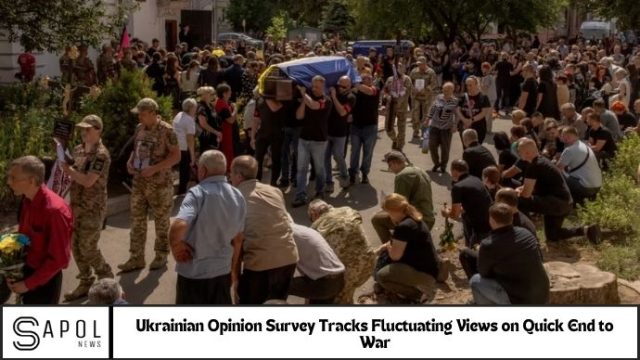
Ukrainian Opinion Survey Tracks Fluctuating Views on Quick End to War

Conclusion

The consensus among U.S. opinion leaders is clear: continued support for Ukraine is not only a moral obligation but a strategic necessity for maintaining global stability. While political divisions may exist, the overwhelming majority of influential voices in the U.S. see the war in Ukraine as a test of international resolve, one that will have lasting consequences for global peace and security.

FAQs:

1. Why do U.S. opinion leaders support continued aid to Ukraine?

U.S. opinion leaders support aid to Ukraine to preserve global security, uphold democratic values, and prevent further Russian aggression.

2. How does continued aid benefit global security?

Continued aid helps deter Russia’s territorial expansion and strengthens NATO’s collective defense, promoting stability in Europe.

3. What types of support is the U.S. providing to Ukraine?

The U.S. provides military, financial, and humanitarian support, including weapons, economic aid, and reconstruction efforts.

4. Are there political divisions in the U.S. regarding Ukraine?

Yes, some lawmakers oppose further aid, citing domestic concerns, but overall bipartisan support remains strong.

5. How does U.S. support affect NATO?

U.S. support for Ukraine strengthens NATO and reassures European allies of America’s commitment to security.

6. What are the long-term benefits of U.S. support for Ukraine?

Long-term benefits include global stability, a stronger international rule of law, and a robust deterrence against future aggressions.

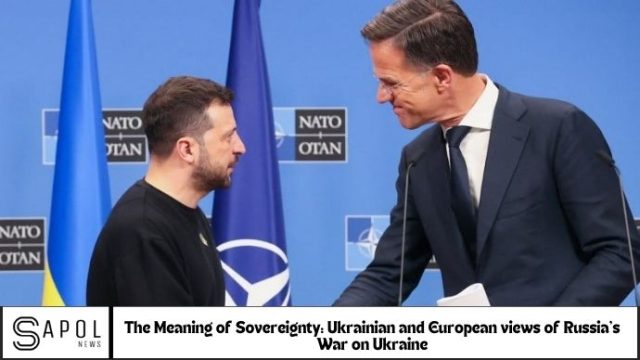
The Meaning of Sovereignty: Ukrainian and European views of Russia’s War on Ukraine

0
The Meaning of Sovereignty: Ukrainian and European views of Russia’s War on Ukraine

The Meaning of Sovereignty: Ukrainian and European views of Russia’s War on Ukraine The first half of 2024 proved to be a challenging period for Ukraine and its Western allies. In the U.S., a delay in the approval of the support package for Kyiv led to a shortage of ammunition on the frontlines. As a result, Russia gained an upper hand by outshelling Ukraine, destroying half of its electricity generation capacity, and reclaiming territory. The outlook for the upcoming winter appeared bleak.

Domestically, Ukraine faced its own set of difficulties. Public discontent rose following the February dismissal of the popular head of the armed forces, Valery Zaluzhny, and the passage of a new mobilization law in April. Meanwhile, in the European Union, a shift to the right in the European Parliament elections empowered several pro-Putin parties, such as France’s National Rally. Adding to the complexity, China and several key countries from the Global South boycotted the June peace summit in Switzerland, signaling the limitations of Western efforts to isolate Russia.

What do citizens across Europe, including Ukraine, think of the war? Have Russia’s military gains impacted the morale of the Ukrainian public? Will Europeans remain supportive of Ukraine amidst their own political crises, including the potential return of Donald Trump to the White House?

To explore these questions, the European Council on Foreign Relations (ECFR) conducted an extensive opinion poll, surveying 19,566 people across 15 countries in early May 2024, just before the European Parliament elections.

The findings offered some reassurance. Despite the dramatic shifts in the war’s trajectory, public opinion has remained largely stable since the beginning of the year. Support for Ukraine has remained steady in the European countries surveyed, and morale in Ukraine is still strong. ECFR’s polling, conducted in Ukraine for the first time, highlights a broad consensus in favor of increasing military aid, particularly weapons and ammunition. This common ground should encourage European leaders to continue supporting Ukraine.

However, beneath the surface, the poll reveals a significant divergence between European and Ukrainian views on how the war will end and the purpose of Europe’s support. While Ukrainians are focused on winning the war with the help of military aid, most Europeans view their support as a means to facilitate a peaceful resolution. This divide also plays out in the public’s attitudes toward Ukraine joining the EU and NATO. Ukrainians largely see membership as a recognition of their sacrifices, while Western leaders often frame it as part of a potential future compromise with Russia. Whether this fundamental difference can be reconciled remains uncertain.

Ukraine’s resilience and political unity have remained strong despite the numerous hardships it has faced. Despite recent territorial losses, widespread infrastructure destruction, and increasing frustration, most Ukrainians continue to place their trust in President Volodymyr Zelensky and the military. While Zelensky’s popularity has slightly dipped, with only 34% of Ukrainians expressing a great deal of trust in him, 31% still have considerable trust. This means that, by a two-to-one margin, those who still support Zelensky outweigh those who do not.

When asked about the war’s likely outcome, Ukrainians remain optimistic: 58% believe Ukraine will win, 30% foresee a negotiated settlement, and only 1% think Russia will prevail. If Western military support increases, optimism rises even further, with 69% of Ukrainians believing in victory and 22% expecting a settlement.

The Ukrainian Perspective on Sovereignty

For Ukrainians, sovereignty is not just a political concept—it is a matter of survival. Since Russia’s invasion in February 2022, Ukraine has fought not only for its land but for its right to self-determination. Sovereignty, in this case, is seen as the core of national identity and freedom.

Key Points:

  • Defending National Identity: For many Ukrainians, the fight against Russia is about preserving Ukraine’s independence, language, and culture.
  • International Recognition: Sovereignty also means Ukraine’s right to have its borders respected and its government freely chosen by its people.
  • Resistance and Resilience: As the war continues, Ukrainians are demonstrating strong resolve in their commitment to protecting their sovereignty, despite the overwhelming odds.

Sovereignty is at the heart of Ukraine’s resistance, as the country faces a powerful neighbor aiming to undermine its autonomy. The war, for many Ukrainians, is a battle for their very existence as a free, independent nation.

The European Perspective on Sovereignty

Europe’s view of sovereignty is also deeply shaped by Russia’s war on Ukraine. For many European countries, the conflict is seen as an assault on the principles of international law and the European security framework. This war challenges not only Ukraine’s sovereignty but also the broader European order.

Key Points:

  • Protection of European Values: Europe views the war as a fight for democracy and rule of law against authoritarianism. Russian aggression threatens European unity and the values of freedom that many European countries hold dear.
  • Geopolitical Stability: European nations are also concerned about the broader geopolitical implications of Russia’s actions. A destabilized Ukraine could lead to spillover effects in other European countries, further undermining security across the continent.
  • Collective Defense: Many European nations see their support for Ukraine as part of a broader commitment to defending not only Ukrainian sovereignty but European sovereignty as a whole.

For Europe, this war is not just about one country’s independence; it is about upholding the international rules-based order that has ensured peace and cooperation in Europe since World War II.

Sovereignty in the Context of Global Politics

The global view of sovereignty in the context of Russia’s war on Ukraine is complex. While the international community, particularly in Europe and the U.S., has largely supported Ukraine’s right to self-determination, Russia challenges this notion. Russia’s claims of historic ties to Ukraine and the desire to protect Russian-speaking populations in Ukraine are framed as justifications for undermining Ukrainian sovereignty.

However, the principles of sovereignty are enshrined in international law, especially the United Nations Charter, which asserts the right of all nations to territorial integrity and political independence. Russia’s actions violate these fundamental principles, drawing international condemnation and leading to global sanctions against Moscow.

How Sovereignty Shapes International Responses

The concept of sovereignty has played a crucial role in shaping the international response to Russia’s invasion. Sanctions, military support for Ukraine, and diplomatic isolation of Russia are all actions aimed at defending Ukraine’s sovereignty and deterring further violations by Russia.

Key Developments:

  • Military Aid: Many nations, especially in Europe and North America, have sent military aid to Ukraine to help it defend its sovereignty.
  • Sanctions on Russia: The global community, led by the EU and the U.S., has imposed stringent economic sanctions on Russia, aiming to weaken its military capabilities and limit its access to resources.
  • Diplomatic Efforts: Diplomatically, Ukraine has received widespread international recognition as the legitimate government of the country, bolstering its claim to sovereignty on the global stage.

May you also like it:

More Americans want the US to stay the course in Ukraine as long as it takes

IRI Ukraine Poll: Strong Support for Victory, EU, and NATO Membership

Latest Polling Reveals Mood in Ukraine and Desire for Optimism

Conclusion

The war in Ukraine is not just a regional conflict—it is a battle for the fundamental principles of sovereignty and self-determination. For Ukraine, it is an existential fight to preserve its independence. For Europe, it is about defending the values of democracy and maintaining geopolitical stability.

As the war continues, both Ukrainian and European perspectives on sovereignty will remain crucial in shaping the international response and in defining the future of international relations. The outcome of this conflict will have far-reaching consequences for how sovereignty is understood and respected in the global order.

FAQ

1. What is the Ukrainian view of sovereignty in the war with Russia?
For Ukrainians, sovereignty means self-determination, preserving national identity, and protecting territorial integrity against Russia’s aggression.

2. How do Europeans view sovereignty in the context of Russia’s invasion?
Europe sees Russia’s actions as a threat to European values such as democracy and rule of law, and the war challenges European security.

3. Why is sovereignty important to Ukraine?
Sovereignty represents Ukraine’s right to exist as an independent, democratic nation and to protect its borders and freedom from foreign domination.

4. How has Russia justified its invasion of Ukraine?
Russia has argued that it needs to protect Russian-speaking populations in Ukraine and that the country has historical ties to Russia, undermining Ukraine’s sovereignty.

5. What international actions are being taken to defend Ukrainian sovereignty?
The international community, especially the EU and the U.S., has provided military aid, imposed sanctions on Russia, and supported Ukraine’s sovereignty diplomatically.

6. What impact does the war have on global sovereignty?
The war in Ukraine tests the international norms around sovereignty, reinforcing the importance of territorial integrity and the global rule of law.

Half of Ukrainians Want Quick, Negotiated End to War

0
Half of Ukrainians Want Quick, Negotiated End to War

Half of Ukrainians Want Quick, Negotiated End to War As the war between Ukraine and Russia stretches into its third year, Ukrainians are showing increasing signs of war fatigue. According to recent surveys conducted by Gallup in August and October 2024, 52% of Ukrainians now support a quick, negotiated end to the war with Russia, marking a significant shift from the country’s early days of defiance. Only 38% want to continue the fight until Ukraine achieves full victory. In this article, we explore the factors driving this change in public opinion and what it might mean for the future of the conflict.

Ukrainians Shift Toward Negotiated Peace


Since the war began in February 2022, Ukraine’s public opinion has undergone a dramatic transformation. Initially, in the face of Russia’s full-scale invasion, 73% of Ukrainians supported continuing the fight until total victory. But as the conflict has dragged on, war weariness has set in. By 2024, support for fighting until victory dropped significantly, with only 38% still holding firm to this stance. Meanwhile, 52% now believe that peace negotiations are the quickest path to ending the war.

This change in sentiment signals a shift from the early defiance toward a more pragmatic approach to the ongoing crisis. Ukrainians have grown increasingly weary of the war’s devastating impact, both in terms of human lives and the country’s infrastructure.

Rising War Fatigue Across Ukraine


Across various regions of Ukraine, support for continuing the fight has been in decline. Even areas most affected by the war, such as the East and South, are seeing diminished enthusiasm for prolonged conflict. In 2024, support for the war has fallen below 50% in all regions. This marks a stark contrast to the earlier days of the conflict when majorities in the East (63%) and South (61%) favored continuing the fight.

The largest drops in support have been observed in regions far from the front lines, like Kyiv (down 39 percentage points) and the West (down 40 points). In contrast, more Ukrainians in the East (63%) are now advocating for an immediate peace settlement over continuing the war (27%).

Willingness to Concede Territory for Peace


As Ukrainians lean toward a negotiated peace, a significant portion of the population is also willing to consider territorial concessions in exchange for an end to the war. Among those supporting negotiations, 52% believe that Ukraine should be open to ceding some of its territory as part of a peace agreement. However, 38% disagree, and 10% remain uncertain about this potential compromise.

Interestingly, even many Ukrainians who continue to support the fight for full victory are beginning to reconsider what “victory” truly means. In 2022 and 2023, nearly all of those who wanted to keep fighting believed “victory” meant regaining all lost territories, including Crimea. By 2024, this view has slightly shifted, with 81% still hoping for complete territorial recovery, a drop from previous years.

Who Should Lead Peace Negotiations?


In the context of peace negotiations, Ukrainians have clear preferences regarding international involvement. 70% of Ukrainians favor the European Union (EU) playing a significant role in peace talks, followed by the United Kingdom at 63%. In comparison, only half of Ukrainians see the U.S. as a key player in these discussions, regardless of whether Donald Trump or Kamala Harris is in power.

This suggests a preference for European-led solutions, reflecting Ukraine’s geographical and political ties to the EU and its members. Many Ukrainians believe that their interests will be best protected through the involvement of these key international partners.

The Future of the War: A Question of Resolve and Strategy


Despite the growing support for a negotiated peace, the conflict is far from over. Russia continues to make inroads on the battlefield, and Ukraine’s military strategy remains under intense scrutiny. As the war enters a critical phase, the international landscape is shifting, especially with the upcoming U.S. elections, which could influence future military and financial support for Ukraine.

In September 2024, Ukrainian President Volodymyr Zelenskyy expressed optimism that the war could be nearing its end. Many Ukrainians may hope that his prediction holds true, and that the long-awaited peace agreement is on the horizon.

May you also like it:

War Speeches and Russia’s Lies About Ukraine, NATO, and Negotiations in January

IRI Ukraine Poll: Majorities Believe in Defeating Russia, Support Recapturing Lost Territory

Diplomacy Watch: Ukrainian Public Opinion More Divided Than Ever

Conclusion


As the war continues to drain resources and lives, Ukrainian public opinion has evolved. While many still support the fight for full territorial recovery, an increasing number are advocating for a swift negotiated peace. The prospect of territorial concessions is now on the table for some Ukrainians, further complicating the political landscape.

The future of Ukraine’s conflict with Russia depends on both domestic public sentiment and international diplomatic efforts. With war fatigue growing and international dynamics shifting, the path to peace could become more achievable—if both sides are willing to make compromises.

FAQs:

Why have Ukrainians shifted toward supporting peace negotiations?
War fatigue, economic strain, and the ongoing human toll have led many Ukrainians to favor a quicker end to the war, even if it means making territorial concessions.

What is the current public opinion on continuing the war?
As of 2024, 38% of Ukrainians support continuing the war for full victory, while 52% favor a quick, negotiated peace.

Would Ukrainians be willing to give up territory for peace?
Yes, 52% of Ukrainians supporting a negotiated peace are open to the idea of making some territorial concessions to end the war.

Which foreign countries do Ukrainians want to lead peace talks?
Ukrainians overwhelmingly favor the EU (70%) and the UK (63%) to play leading roles in peace negotiations, rather than the U.S.

What does “victory” mean to Ukrainians in 2024?
While most Ukrainians still desire to regain all lost territory, including Crimea, the percentage of people holding this view has dropped slightly to 81% in 2024.

What could the future hold for Ukraine’s conflict with Russia?
The outcome of the war will depend on both military strategies on the front lines and diplomatic negotiations involving key international players.

Public Views on Ukraine and U.S. Involvement in Russia-Ukraine War

0
Public Views on Ukraine and U.S. Involvement in Russia-Ukraine War

Public Views on Ukraine and U.S. Involvement in Russia-Ukraine War The Russia-Ukraine war has created a deeply divided global landscape, with public opinion varying greatly about the role of the United States in supporting Ukraine. While many Americans view the conflict as a critical geopolitical challenge, there are significant differences in how the U.S. should engage. With the war entering its third year, what do the latest polls tell us about how the U.S. public views the situation in Ukraine? And how do those opinions influence U.S. involvement moving forward?

U.S. Views on Support for Ukraine

Approximately 31% of Americans now believe the U.S. is providing too much support to Ukraine, a significant increase from just 7% in March 2022, right after Russia’s invasion. Meanwhile, 25% feel the support is just right, and 24% think it’s insufficient. Around 18% of Americans remain unsure.

In March 2022, nearly 42% of Americans thought the U.S. wasn’t doing enough to help Ukraine, a view that has since dropped by nearly 20 percentage points. The shift reflects growing concerns over the extent of U.S. involvement, as more people now question the level of support being offered.

Partisan Differences on U.S. Support for Ukraine

The partisan divide is evident. Half of Republicans and Republican-leaning independents (49%) believe the U.S. is giving too much aid to Ukraine, compared to only 16% of Democrats and Democratic-leaning individuals. In contrast, 36% of Democrats now think the U.S. isn’t providing enough support—an increase from 24% in November 2023.

Among Republicans, conservative Republicans are more likely to oppose Ukraine aid (54%) than moderate or liberal Republicans (40%). Similarly, liberal Democrats (11%) are less likely to think the U.S. is providing too much assistance compared to conservative and moderate Democrats (54%).

Younger Americans from both parties are also more likely to say that the U.S. is providing excessive support and to express uncertainty on the matter.

Concerns About Russia’s Expansion and Ukraine’s Future

Concerns over Russia’s potential to defeat Ukraine have been rising, with 44% of Americans extremely or very concerned about a Russian victory and takeover of Ukraine. This marks a 6% increase since September 2022 but remains below the 55% who held similar concerns in April 2022. The rise in worry is especially notable among Democrats, where 55% express strong concern, up by 10 percentage points since the previous year.

Republicans show less concern, with only 35% deeply worried about a Russian victory. Liberals are notably more concerned than conservatives and moderates on both sides of the political spectrum.

Worries About Russia Invading Other Countries

Americans are also more concerned about the possibility of Russia invading additional countries in the region. 48% of Americans now express extreme concern about this threat, an increase from 41% in September 2022. However, this is still lower than the 59% who were concerned early in the war, in April 2022.

The concern is especially high among liberal Democrats, with 58% extremely or very worried, compared to 41% of conservative Republicans. Additionally, older Americans (ages 65 and older) are more likely to be alarmed by Russia’s potential actions, with 61% expressing deep concern, compared to 41% of younger adults under 30.

U.S. Support for Ukraine: A Divided Landscape

As of early 2024, surveys show that Americans remain divided in their support for Ukraine, despite overwhelming international sympathy for Ukraine’s sovereignty. According to a recent University of Maryland poll, 62% of Americans expressed sympathy for Ukraine, with an even higher number of Democrats supporting Ukrainian resilience against Russian aggression. However, partisan differences are evident. While 76% of Democrats sympathize with Ukraine, only 58% of Republicans share the same sentiment. In contrast, just 2% of Americans reported sympathy for Russia in this conflict.

Increased U.S. Support for Ukraine: A Growing Trend

Over the course of the war, U.S. public opinion has shown a shift in favor of continued support for Ukraine. While early opinions were mixed, 48% of Americans now favor long-term U.S. support for Ukraine, according to the latest polling from the University of Maryland’s Critical Issues Poll. This figure includes 37% of Republicans and 63% of Democrats, highlighting the increasing bipartisan consensus. Despite political polarization at home, U.S. support for Ukraine has strengthened, with a growing belief that U.S. assistance is crucial in preventing further Russian advances in the region.

Challenges to U.S. Support: Partisan Divides and Election Politics

While many Americans favor continued support for Ukraine, partisan divides remain a significant factor in shaping views of U.S. involvement. As the U.S. heads into the 2024 election cycle, Republican candidates have voiced opposition to additional military aid for Ukraine, with figures like Donald Trump proposing that the U.S. should focus on domestic issues rather than engaging in foreign conflicts. This political shift has led to Republicans’ decreased support for U.S. involvement, particularly regarding financial aid and military assistance to Ukraine.

On the other hand, Democrats have largely remained firm in their support for Ukraine’s sovereignty, arguing that the U.S. should remain a strong ally in the face of Russian aggression. The contrast in party lines reveals a tension that may play a significant role in shaping U.S. foreign policy toward Ukraine in the near future.

Ukrainian Public Sentiment: Optimism Amid Adversity

While U.S. public opinion fluctuates, Ukrainians remain resolute and optimistic about their future. Despite Russia’s territorial gains, 58% of Ukrainians believe Ukraine will eventually win the war, bolstered by continued support from Western countries. Ukrainian morale remains strong, especially with increased military aid. If Western weapons and ammunition supplies increase, 69% of Ukrainians believe they can achieve victory over Russia.

In addition to military aid, Ukrainians view membership in the European Union (EU) and NATO as key to securing lasting peace and prosperity. For many Ukrainians, NATO and EU membership are not just political goals—they represent international recognition of Ukraine’s struggles and sacrifices.

May you also like it:

The Meaning of Sovereignty: Ukrainian and European views of Russia’s War on Ukraine

More Americans want the US to stay the course in Ukraine as long as it takes

IRI Ukraine Poll: Strong Support for Victory, EU, and NATO Membership

Conclusion

While American and Ukrainian public opinions on the Russia-Ukraine war diverge in terms of objectives and desired outcomes, both publics share common ground in their desire for a resolution that favors Ukraine’s sovereignty and stability. Bipartisan support in the U.S. for continued assistance has grown, but political divides—especially in the Republican camp—could present obstacles to future U.S. involvement.

For U.S. policymakers, understanding these differences is key. As Ukrainian resilience continues to inspire, the question remains: How can the U.S. continue to support Ukraine while balancing domestic concerns and international pressures?

FAQs:

What is the current level of U.S. support for Ukraine?

48% of Americans support long-term U.S. involvement in Ukraine, including military aid and diplomatic efforts.

Are Americans divided on supporting Ukraine?

Yes, Republicans and Democrats show notable differences in their support, with Democrats generally more supportive of Ukraine.

How does the U.S. view Russia’s role in the war?

The majority of Americans sympathize more with Ukraine than with Russia, reflecting a broad consensus against Russian aggression.

What role does the U.S. play in Ukraine’s military efforts?

The U.S. provides military aid, ammunition, and economic support to Ukraine, contributing significantly to the war effort.

Do Ukrainians want NATO membership?

Yes, NATO membership is viewed by most Ukrainians as a necessary step toward securing peace and recognizing their sacrifices.

What challenges does the U.S. face in supporting Ukraine?

Partisan divides, the election season, and domestic political concerns complicate U.S. policy on supporting Ukraine.

War Speeches, ATACMS & Abrams for Ukraine, and Russia’s Diplomatic Moves

0
War Speeches, ATACMS & Abrams for Ukraine, and Russia’s Diplomatic Moves In the ongoing conflict between Ukraine and Russia, international diplomatic and military developments are shaping the global response.

War Speeches, ATACMS & Abrams for Ukraine, and Russia’s Diplomatic Moves In the ongoing conflict between Ukraine and Russia, international diplomatic and military developments are shaping the global response. As the war intensifies, Western countries are significantly ramping up support for Ukraine, with new military aid packages including ATACMS missiles, Abrams tanks, and artillery supplies. Meanwhile, Russia continues to manipulate international platforms like the UN Charter to justify its actions and distance itself from accountability. As these dynamics unfold, the global community is navigating complex political alliances, shifting loyalties, and the future of international law. This article takes a closer look at recent developments, including the Ramstein meeting, Zelensky’s visits to the US and Canada, and the UN General Assembly debates, alongside Russia’s tactics in undermining diplomatic efforts.

Key Military Assistance for Ukraine: Strengthening Defenses

During the week of September 18–24, a new wave of military support for Ukraine was announced, including air defense systems, tanks, armored vehicles, and a potential delivery of ATACMS long-range missiles. This new assistance is crucial as Ukraine continues its defense against Russian aggression.

  • ATACMS Missiles: These precision-guided missiles offer Ukraine the ability to strike targets deep within Russian-occupied areas, changing the dynamics on the battlefield.
  • Abrams Tanks and Artillery: Countries like Germany, Denmark, and Sweden are sending additional armored vehicles and artillery shells, enhancing Ukraine’s ability to defend against Russian forces.
  • IT and Cyber Support: In addition to traditional military aid, a coalition involving Estonia, Luxembourg, Belgium, Denmark, and others is focusing on improving Ukraine’s cybersecurity and communications, critical elements for modern warfare.

Countries such as the US, Canada, Germany, and Denmark are also providing tank reinforcements, including Leopard 1, T-72, and Stridsvagn 122 tanks, as well as drones and trucks to ensure operational efficiency on the ground.

Diplomatic Developments: UN General Assembly and Russia’s Manipulation

The high-level sessions of the 78th UN General Assembly were marked by significant speeches and debates on the ongoing war.

  • Support for Ukraine’s Territorial Integrity: World leaders reaffirmed their support for Ukraine’s territorial integrity. President Joe Biden of the United States stated that Russia is solely responsible for the war and could end it immediately by ceasing aggression.
  • Zelensky’s Call for a “Just Peace”: President Volodymyr Zelensky of Ukraine urged the UN to back Ukraine’s peace plan and criticized Russia’s unyielding position. He reminded the assembly that the global community must hold Russia accountable for its actions, including the deportation of Ukrainian children and its energy and food blackmail.

However, Sergei Lavrov, Russia’s foreign minister, continued to twist the UN Charter and argued that Ukraine’s territorial integrity is no longer valid due to the so-called “coup” that ousted former President Yanukovych, positioning the Russian invasion as a corrective measure.

  • Russian “Peace” Proposals: Lavrov reiterated Russia’s position, rejecting any proposals for a ceasefire. The Russian delegation promoted an unacceptable ultimatum-like peace plan, demanding territorial concessions from Ukraine and a non-bloc status for the country.

Ukraine’s Diplomatic Push and Russia’s Loss of Allies

On the diplomatic front, Ukraine’s President Zelensky made visits to both the US and Canada, urging continued support for his country’s defense efforts.

  • Financial Assistance: Zelensky met with US lawmakers and President Joe Biden to push for an additional $24 billion in military aid. Biden’s administration also promised to provide a $325 million assistance package, which included critical artillery and air defense systems.
  • Canada’s Support: In addition to military supplies, Canada committed to long-term defense assistance, with half a billion USD allocated for Ukraine’s defense needs.

Meanwhile, Russia has faced diplomatic setbacks, including its failure to intervene in Armenia’s conflict with Azerbaijan. Russia’s inaction allowed Azerbaijan to carry out a successful military operation in Nagorno-Karabakh, revealing Russia’s declining influence in the region.

Russia’s Unstable Alliances: Armenia and Georgia

Russia’s diplomatic troubles are not limited to its relationships with NATO countries. Armenia and Georgia, former allies, have grown disillusioned with Russia’s actions.

  • Armenia’s Conflict with Azerbaijan: Russia’s failure to support Armenia in its conflict with Azerbaijan over Nagorno-Karabakh highlighted the weakness of Russia’s role as a regional peacekeeper.
  • Georgia’s Political Turmoil: Meanwhile, in Georgia, accusations surfaced that Ukraine was involved in attempts to destabilize the government. Georgia’s ruling party even initiated the impeachment of the country’s pro-European president.

In both cases, Russia’s reluctance to honor its commitments has led to a deterioration of these key alliances, further isolating the country.

May you also like it:

Ukrainian Opinion Survey Tracks Fluctuating Views on Quick End to War

Ukrainian Public Opinion on Compromise with Russia Changing, Researcher Explains

Diplomacy Watch: Ukrainian Public Opinion More Divided Than Ever

Conclusion

The war in Ukraine has become a pivotal issue not only for Ukraine and Russia but for the entire international community. Western countries are increasing their military aid to Ukraine, while Russia is intensifying its diplomatic efforts to manipulate international law and avoid accountability.

  • Global Support for Ukraine remains strong, as evidenced by the US, Canada, and EU pledges. The ATACMS missiles, Abrams tanks, and other military aid packages are crucial in giving Ukraine the strength to resist Russian forces.
  • Russia’s Manipulation of the UN Charter to justify its invasion has raised concerns among the international community about the future of global diplomacy and security.

As the situation continues to evolve, Ukraine’s peace plan and diplomatic efforts will remain a central focus, while Russia’s weakening alliances and questionable peace proposals will continue to challenge the international order.

FAQs

1. What military aid is Ukraine receiving from Western countries?
Ukraine is receiving various military supplies, including ATACMS long-range missiles, Abrams tanks, Leopard tanks, armored vehicles, and artillery shells. These are crucial to enhancing Ukraine’s defensive capabilities against Russian aggression.

2. What is the importance of the UN General Assembly in the Ukraine conflict?
The UN General Assembly provides a global platform for leaders to discuss the war, with countries reaffirming support for Ukraine’s territorial integrity. It also allows Ukraine to present its peace plan, while Russia manipulates international law to justify its invasion.

3. How has Russia reacted to Ukraine’s calls for peace?
Russia, through Foreign Minister Sergei Lavrov, has rejected any ceasefire proposals and presented an unacceptable ultimatum-style peace plan. Russia insists that its actions are justified due to the alleged “coup” in Ukraine and claims it is protecting Russian-speaking populations.

4. What happened with Russia’s alliances in Armenia and Georgia?
Russia’s failure to support Armenia in the Nagorno-Karabakh conflict with Azerbaijan has strained relations. Additionally, Ukraine was accused of interfering in Georgia’s internal politics, leading to a presidential impeachment. These issues reflect Russia’s declining influence in the region.

5. What has President Zelensky’s international outreach achieved?
During visits to the US and Canada, President Zelensky secured significant military and financial commitments, including a $24 billion aid request and a $325 million defense package from the US. Canada also pledged half a billion USD for Ukraine’s long-term defense needs.

6. How is the UN Security Council addressing the war?
The UN Security Council is paralyzed due to Russia’s veto power. Ukraine has called for reforms to overcome this deadlock, suggesting the General Assembly be given more authority to combat aggression and pass preventive sanctions.

IRI Ukraine Poll: Strong Support for Victory, EU, and NATO Membership

0
IRI Ukraine Poll: Ukrainians Support Victory, EU, NATO Membership

IRI Ukraine Poll: Strong Support for Victory, EU, and NATO Membership The latest public opinion survey in Ukraine, conducted by the International Republican Institute’s (IRI) Center for Insights in Survey Research (CISR), reveals overwhelming optimism among Ukrainians about their future, along with strong support for aligning with the West. The survey shows that a significant majority believe Ukraine will defeat Russia in the ongoing war and are hopeful about the country’s future.

Key Findings:

  • 88% of Ukrainians are confident that Ukraine will emerge victorious in the war with Russia.
  • 80% of Ukrainians believe the future of their country looks “rather promising.”

Despite more than two years of relentless attacks from Russia, Ukrainians maintain their belief in ultimate victory. Stephen Nix, Senior Director for Eurasia at IRI, commented, “Ukrainians continue to believe they will prevail in the war, showing that Putin has not been able to shake their strong morale.”

Strong Support for EU and NATO Membership

The survey also underscores Ukraine’s desire to align more closely with the West. 77% of Ukrainians would favor joining the European Union over a customs union with Russia, Belarus, and Kazakhstan. Additionally, if a referendum were held today, 77% would vote in favor of Ukraine becoming a member of NATO.

Stephen Nix added, “Our data clearly shows that Ukrainians believe stronger ties with the West offer their best opportunity for achieving lasting peace and prosperity.”

Key Findings from the IRI Ukraine Poll

The International Republican Institute (IRI) conducted a comprehensive survey in late 2024, providing a detailed look at the public sentiment in Ukraine. Here are the most significant findings:

  • Victory Over Russia: An impressive 84% of Ukrainians believe their country will ultimately defeat Russia and regain its occupied territories. This shows strong national resolve and a deep sense of optimism despite the ongoing war.
  • Support for EU Membership: Nearly 70% of Ukrainians express support for joining the European Union, reflecting a desire for greater political and economic integration with the West. This is viewed not only as a means of securing a prosperous future but also as a symbol of democratic values.
  • NATO Membership: A similar level of support exists for joining NATO, with 71% of Ukrainians backing the alliance. Many see NATO membership as a way to strengthen national security and deter future aggression.

Insights into the Public Mood

  • Patriotism and National Unity: The poll highlights an overwhelming sense of patriotism, with many Ukrainians willing to endure further sacrifices for the nation’s sovereignty.
  • Trust in Leadership: There is also a notable trust in the Ukrainian leadership and military, with President Zelenskyy maintaining high approval ratings.

The Desire for EU and NATO Membership

As the war continues, Ukraine’s aspirations to join the European Union and NATO have become central to its national identity and future. These aspirations are reflected in the strong polling results, which signal the public’s desire for:

  • Economic Growth: EU membership is seen as a pathway to economic stability and growth, offering access to European markets, funding, and a better standard of living.
  • Security: NATO membership, meanwhile, is viewed as a guarantee of national security against external threats, particularly from Russia.

The Broader Implications for Ukraine’s Future

The strong support for NATO and EU membership also highlights a broader shift in Ukrainian identity, moving closer to Europe and away from Russian influence. This realignment has the potential to reshape Ukraine’s foreign policy for decades to come.

  • Western Support: The poll results reinforce the importance of continued Western support. The United States, EU, and NATO allies will likely need to respond to this public sentiment with sustained military, economic, and diplomatic backing.
  • Geopolitical Repercussions: Ukraine’s growing ties to Europe could lead to new geopolitical alliances and a redefined balance of power in Eastern Europe.

May you also like it:

Latest Polling Reveals Mood in Ukraine and Desire for Optimism

Wide Partisan Divisions in Americans’ Views of the War in Ukraine: What You Need to Know

War Speeches, ATACMS & Abrams for Ukraine, and Russia’s Diplomatic Moves

Conclusion

The IRI Ukraine Poll underscores a deep-seated belief among Ukrainians that their country will prevail in the war against Russia and a strong desire for integration with the West. With overwhelming support for EU and NATO membership, the poll signals not only the resilience of the Ukrainian people but also their clear vision for the future. Ukraine’s future is undeniably tied to its aspirations for greater political and economic alignment with Europe, which will continue to shape its path forward.

FAQ

1. How confident are Ukrainians about victory over Russia?
Around 84% of Ukrainians believe their country will win the war and regain its territories, showing strong national resolve.

2. What percentage of Ukrainians support joining the European Union?
70% of Ukrainians support EU membership, reflecting a desire for political and economic integration with Europe.

3. How do Ukrainians feel about NATO membership?
71% of Ukrainians are in favor of joining NATO, viewing it as vital for national security and deterrence against future aggression.

4. How does the war affect Ukraine’s aspirations for EU and NATO membership?
The war has reinforced Ukrainians’ desire for closer ties to Europe and NATO, seeing these alliances as crucial for security and prosperity.

5. What does the polling reveal about Ukrainians’ trust in their leadership?
Ukrainians continue to show high levels of trust in President Zelenskyy and the military, supporting the country’s leadership during the conflict.

6. What are the broader geopolitical implications of Ukraine’s EU and NATO aspirations?
Ukraine’s shift towards European integration could reshape Eastern European geopolitics, strengthening ties with the West and altering regional power dynamics.

Popular Posts